

How to Choose a Used Ranch or Farm Work Truck
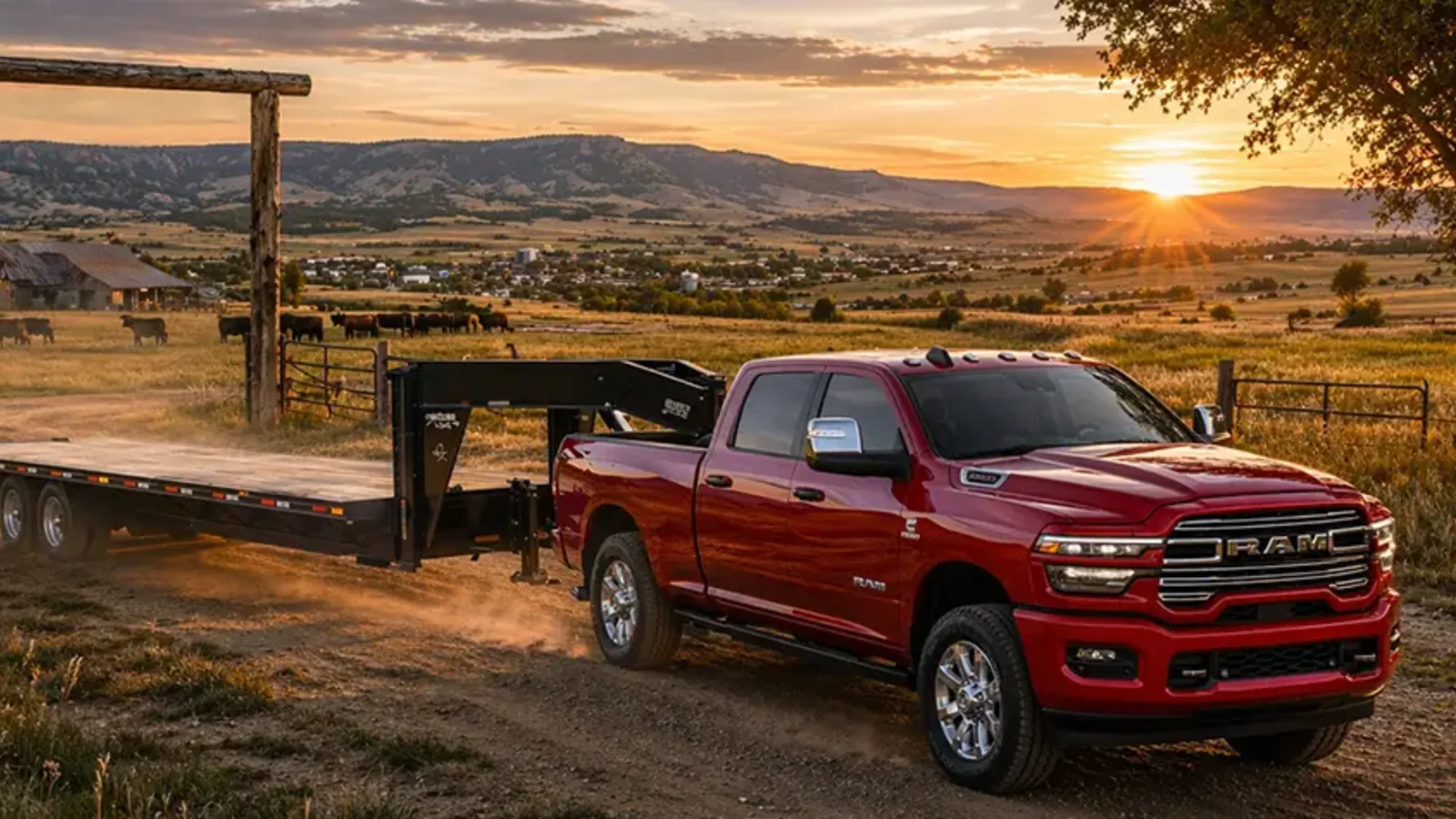
A ranch truck might carry fencing supplies in the morning, pull a stock trailer in the afternoon and take the family into town that evening. Those jobs ask different things of the same pickup. Before choosing a Ford, Ram, Chevrolet or another used truck, make a list of what you actually need it to carry and pull.
Start with the loads. Then compare the truck’s ratings, bed, seating, equipment and condition. A trim name, large engine or heavy-duty badge cannot tell you whether a particular used truck fits your trailer and tools.
This guide is for mixed-make used-truck shopping around Belle Fourche, Sturgis, Sheridan and the surrounding ranch country. Use it to narrow your search, then confirm the exact truck’s limits and arrange an inspection before buying. You can start comparing available vehicles through Wareing Motors’ used truck inventory.
Start with the jobs, not the badge
Write down a normal workweek and your heaviest planned job. Keep those two lists separate. A truck that spends most days carrying hand tools may have different requirements from one assigned to a loaded livestock trailer.
Include the people and equipment that go with each job. Your list might cover:
- Fencing tools, posts, wire and repair supplies
- Feed, water containers or other bed cargo
- A stock, horse, utility or equipment trailer
- A toolbox, auxiliary tank or replacement work body
- Passengers, child seats and personal gear
- Highway trips, yard work and access roads
Use actual weights wherever possible. Keep loaded scale tickets for trailers you already own. A trailer’s empty weight does not describe its working weight with animals, equipment or supplies aboard. If you do not yet own the trailer, obtain its specifications and estimate the planned cargo carefully before committing to a truck.
Also measure the places you use. Write down your gate opening, shed clearance, parking space and the length of the equipment that belongs in the bed. Bring those notes to a test drive. They help turn a general conversation about a “work truck” into a comparison of specific vehicles.
Check payload and towing together

Payload is the weight the truck carries, including occupants and cargo. Trailer tongue or pin weight also uses carrying capacity. Ford’s load-carrying guidance specifically includes these loads, and other manufacturers provide vehicle-specific trailering instructions and ratings.
The large towing figure in an advertisement is only one part of the decision. Find the truck’s tire/loading and certification labels, then use the correct model-year owner’s manual and towing guide. Confirm the engine, axle ratio, cab, bed, drivetrain and required towing equipment.
Compare these limits together:
| Item to confirm | Why it belongs in your shopping notes |
|---|---|
| Payload allowance | People, tools, cargo and hitch load all need room in the calculation |
| GVWR | Limit for the loaded truck |
| Front and rear GAWR | Limits for each axle |
| GCWR | Limit for the loaded truck and trailer combination |
| Trailer rating | Must match the truck’s actual configuration |
| Hitch and tire ratings | Check the installed components, not an assumed factory setup |
Do not treat a larger hitch as proof that the truck can carry or tow more. Ask a qualified professional to check any modified setup against the vehicle and component ratings.
For shopping, make two columns: what the truck must handle and what you have verified for that particular truck. Leave an unknown blank rather than filling it with a number from a different trim. Before towing, use loaded measurements and the manufacturer’s instructions to confirm the complete combination.
For more detail on comparing towing configurations, see our used truck towing guide.
Half-ton, three-quarter-ton or one-ton?
These labels are useful starting points for browsing. They are not the truck’s actual payload figures.
You may compare an F-150, Ram 1500 or Silverado 1500 with an F-250, Ram 2500 or Silverado 2500HD. A heavier job may lead you toward an F-350, Ram 3500 or Silverado 3500HD. That list identifies model families to investigate, not a guarantee that every example qualifies for your work.
When to include half-ton trucks
Keep a half-ton on your list when its verified ratings fit your loads and you also want to evaluate it for everyday driving. Bring your passenger and cargo list with you. Check whether the truck still fits the job after accounting for the equipment you intend to add.
Do not rule it in simply because a similar truck pulls a similar-looking trailer. Compare the actual weights and configuration.
When to compare heavy-duty trucks
Move your search toward heavy-duty configurations when your planned loads do not fit the lighter trucks you have checked. Compare used heavy-duty trucks by their labels, equipment and condition.
If a dual-rear-wheel truck enters the shortlist, measure its width against your gates, parking and daily routes. If a single-rear-wheel truck meets all the required ratings, compare the two in person rather than assuming one layout suits every ranch.
An oversized purchase can still be the wrong purchase. The goal is enough verified capacity for the work, with a layout you can live with and a maintenance history you can evaluate.
Choose the cab and bed around your work
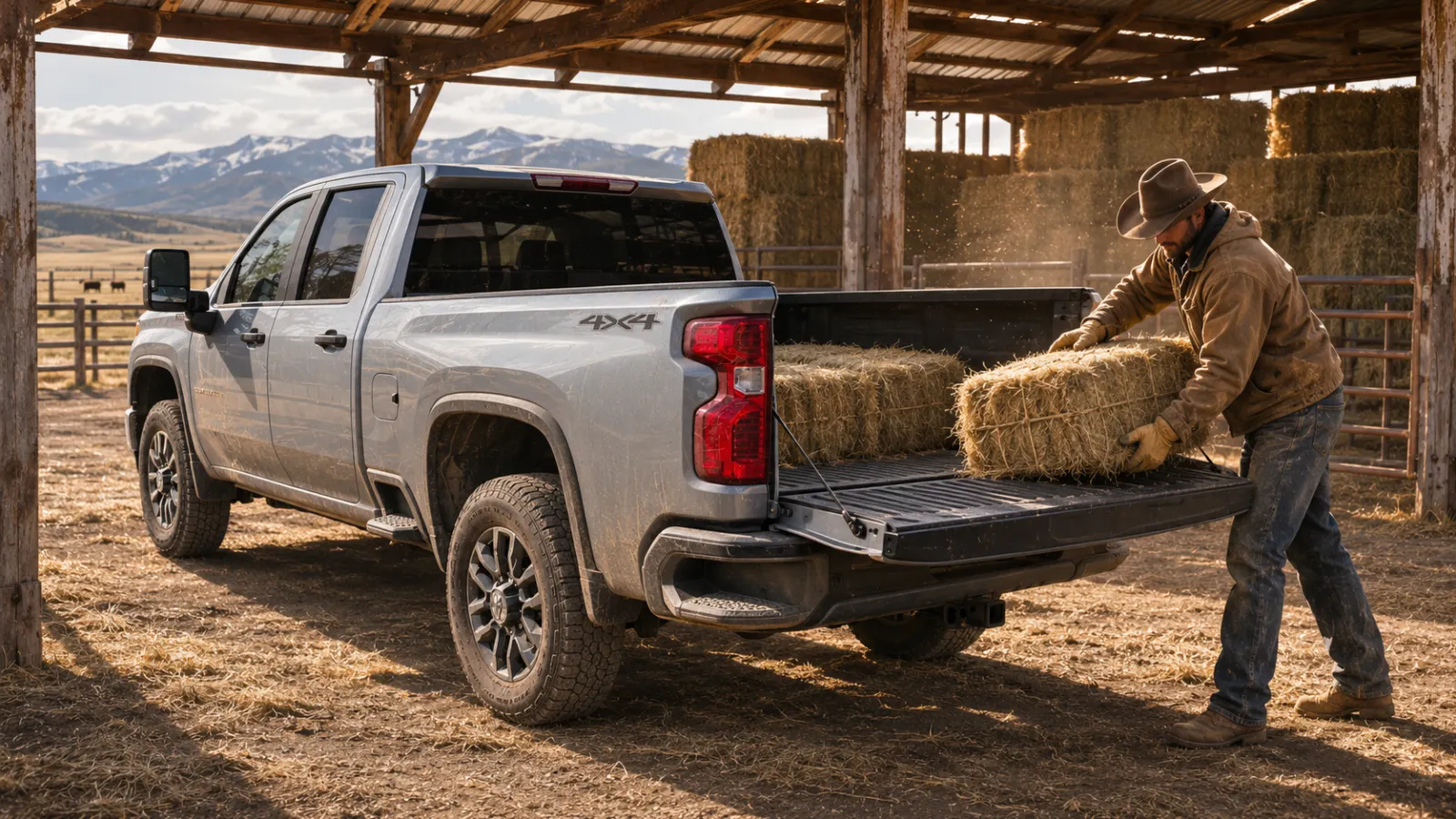
A cab and bed combination that looks right online deserves a hands-on check.
Count regular passengers first. Sit in the seats you will actually use. If child seats are part of the routine, bring them and check installation according to the vehicle and seat instructions. Think about where coats, work bags and tools will go without crowding occupants.
Then measure the usable bed with the tailgate closed. Account for wheel wells, the toolbox and anything already mounted there. An eight-foot bed may fit your equipment list, but bed length alone does not settle the choice.
Ask yourself:
- Can the load be secured with the tie-down points available?
- Does a toolbox occupy space needed for feed or fencing supplies?
- Can you reach regularly used tools without an awkward climb?
- Will the hitch installation interfere with the bed setup?
- Does the complete truck fit the shed and turn comfortably through your access points?
For a gooseneck or fifth-wheel setup, have the hitch and clearance requirements checked for that exact truck and trailer. Do not assume that an existing ball or set of rails proves the installation is correct.
A used truck may have a flatbed or service body installed after manufacture. Ask for the installation details and have the completed vehicle’s weight and suitability assessed. Photographs cannot establish its remaining capacity.
Look beyond the 4WD badge
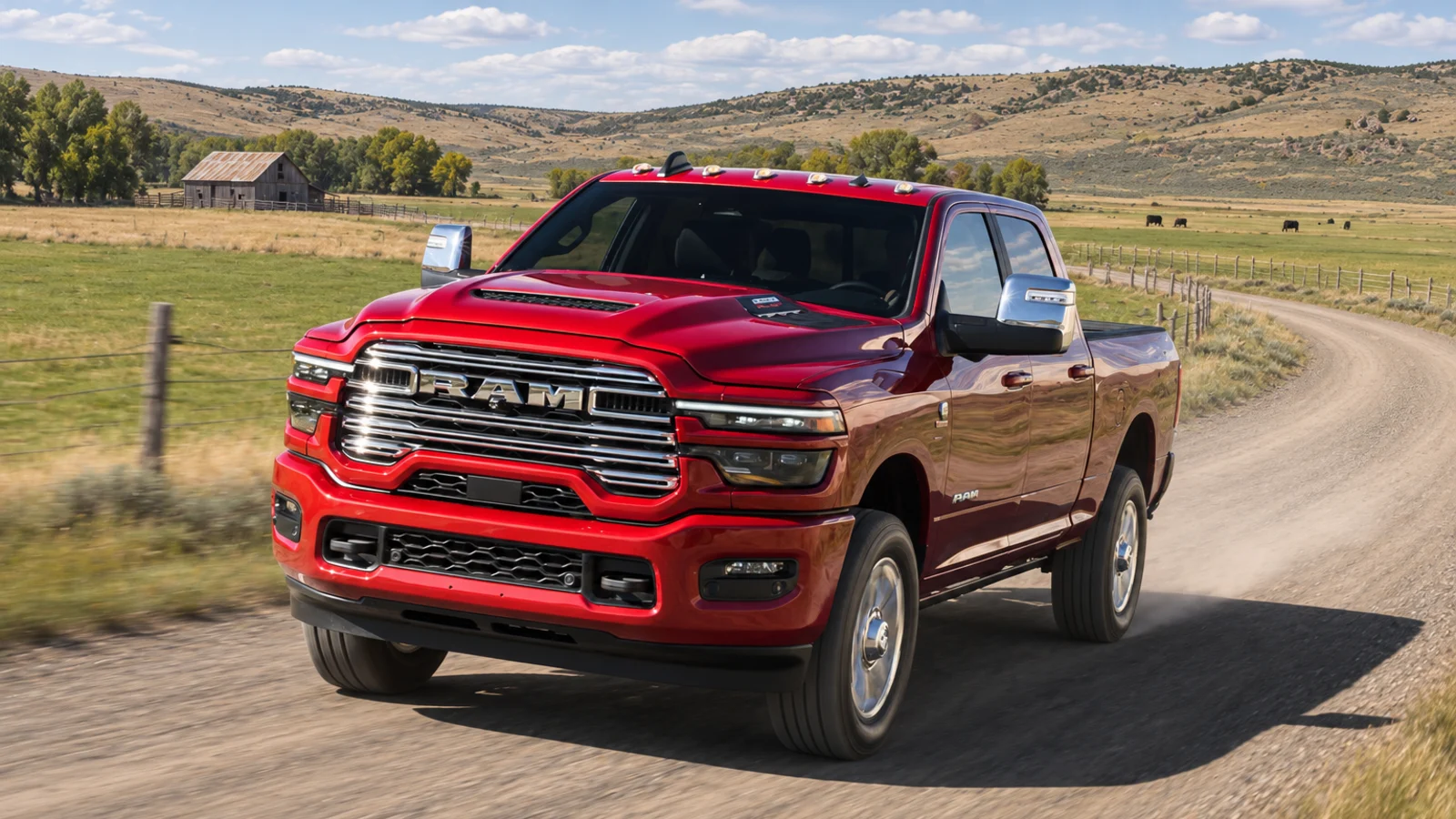
Decide where you need to drive before deciding what equipment belongs on the truck. Your highway route, graded lane, pasture access and winter storage area may call for different priorities.
Confirm which four-wheel-drive system the used vehicle has, how it operates and whether it works correctly. Follow its owner’s manual during a test. A seller’s description of “4×4” does not establish low-range availability, differential equipment or the condition of the system.
Inspect tires as part of the same decision. NHTSA recommends using the vehicle manufacturer’s tire information and checking pressure, tread and damage. Read the labels and have a tire professional evaluate whether the installed tires are appropriate for the truck and intended loads.
Treat ground clearance as another measurement to verify. Check vulnerable components and any aftermarket changes. A lift kit does not provide evidence of a higher load rating or guarantee that a loaded truck can clear your route.
For a practical comparison, photograph the access points that concern you and discuss them at the dealership. Avoid making a test drive into an off-road capability test. Use a suitable, permitted route and keep the vehicle within its operating instructions.
Gas or diesel for your work miles?
Compare the work schedule before choosing the fuel type. How much time will the truck spend on the highway, moving around the property, idling or towing? How often will it reach normal operating temperature?
A gas truck may belong on your shortlist if its verified ratings meet the work. A diesel may also belong there, particularly when comparing configurations for demanding towing. Neither fuel type automatically makes a used vehicle the right purchase.
Modern diesel ownership needs model-specific homework. Some diesel engines use a particulate filter that requires regeneration. Ford’s owner guidance warns that certain short, low-speed or stationary operating patterns may not allow sufficient cleaning. Read the instructions for the specific diesel you are considering rather than assuming every system works the same way.
Ask for records covering the engine, fuel system and emissions equipment. Have warning messages and modifications evaluated by a qualified technician. Do not accept “they all do that” as an explanation for a warning light.
Build an ownership budget from real information: purchase price, insurance quotes, fuel use for your likely driving, scheduled service and any repairs identified during inspection. There is no universal mileage at which diesel becomes the cheaper choice for every ranch. Compare the actual trucks and your use instead of relying on a generic fuel-savings promise.
Inspect the truck’s working history
An older work truck can have a detailed maintenance record or a long list of unknowns. Find out which you are considering.
Ask what it hauled, how often it towed and whether it spent time plowing, idling or carrying a permanently installed load. Look for paperwork that supports the answers. A clean cabin does not replace a mechanical inspection.
Arrange an independent pre-purchase inspection. The FTC advises buyers that a history report is not a substitute for an independent inspection. Tell the technician how you plan to use the truck so the assessment addresses your intended work.
Have these areas reviewed:
- Frame, mounts and evidence of structural repair
- Engine, cooling system and fluid leaks
- Transmission, driveline and four-wheel-drive operation
- Brakes, steering, suspension and tires
- Bed, hitch mounting points and trailer wiring
- Added equipment and signs of previous modifications
Check recalls by VIN through NHTSA or the manufacturer. A recall search and a mechanical inspection answer different questions, so use both. Ask for documentation of completed recall work when relevant.
Our used truck inspection checklist walks through the inspection process in more detail. If you are still comparing model families, the reliable used trucks guide can help organize that research without treating a badge as a guarantee.
Ranch truck shopping worksheet
Before visiting a truck, prepare one sheet with:
- Regular work: the people, cargo and trailer you expect to use most often.
- Heaviest planned job: loaded weights and hitch type.
- Truck requirements: verified capacity, seating and bed dimensions.
- Access requirements: gate, shed and parking measurements.
- Ownership questions: service history, modifications and inspection arrangements.
- Next steps: the information still missing before you can make a decision.
Keep the same sheet for every truck you inspect. It makes differences easier to see and prevents a comfortable seat or attractive price from distracting you from an unresolved load question.
Ranch and farm truck FAQ
What is the best truck for ranch work?
The useful choice is the specific truck that fits your verified loads, access, seating and budget, and passes inspection. There is no single model or trim that meets every ranch’s needs. Start with your jobs and compare actual vehicles.
Is a half-ton enough for a farm truck?
It can be a candidate if the truck’s exact ratings cover the loaded combination and equipment you plan to use. Confirm those figures before buying. If the figures do not work, compare heavier-duty configurations.
Does payload matter if the trailer is under the towing limit?
Yes. The truck still carries people, cargo and the trailer’s tongue or pin load. You need to satisfy the relevant truck, axle, tire, hitch and combination limits, not just the headline trailer rating.
Do I need an eight-foot bed?
Measure your equipment and consider how you will secure it. Also check passenger needs, hitch clearance and the truck’s overall size. An eight-foot bed is a configuration choice to evaluate, not a requirement for every farm or ranch.
Is four-wheel drive required?
That depends on your routes and operating conditions. Confirm the system, tires and vehicle condition rather than assuming 4WD guarantees access. If uncertain about the terrain, discuss it with a qualified professional before choosing or attempting a route.
Should I avoid a used truck that has towed livestock?
Previous use is a reason to ask questions and inspect carefully, not a complete diagnosis. Review the maintenance, hitch, frame, suspension and drivetrain. Have a technician assess the individual truck before deciding.
What mileage is too high for a work truck?
Do not use one mileage cutoff as a substitute for inspection. Consider service records, age, operating history, condition and required repairs together. Ask about engine hours if the truck records them.
Compare used work trucks at Wareing Motors

Bring your load list, trailer information and measurements when you contact the store with a truck you are considering. Ask for the vehicle’s configuration, label information and inspection arrangements before making the trip.
Browse used trucks at Wareing Motors to build a shortlist across the group. Then compare the individual truck with the work you need it to do.

0 comment(s) so far on How to Choose a Used Ranch or Farm Work Truck