

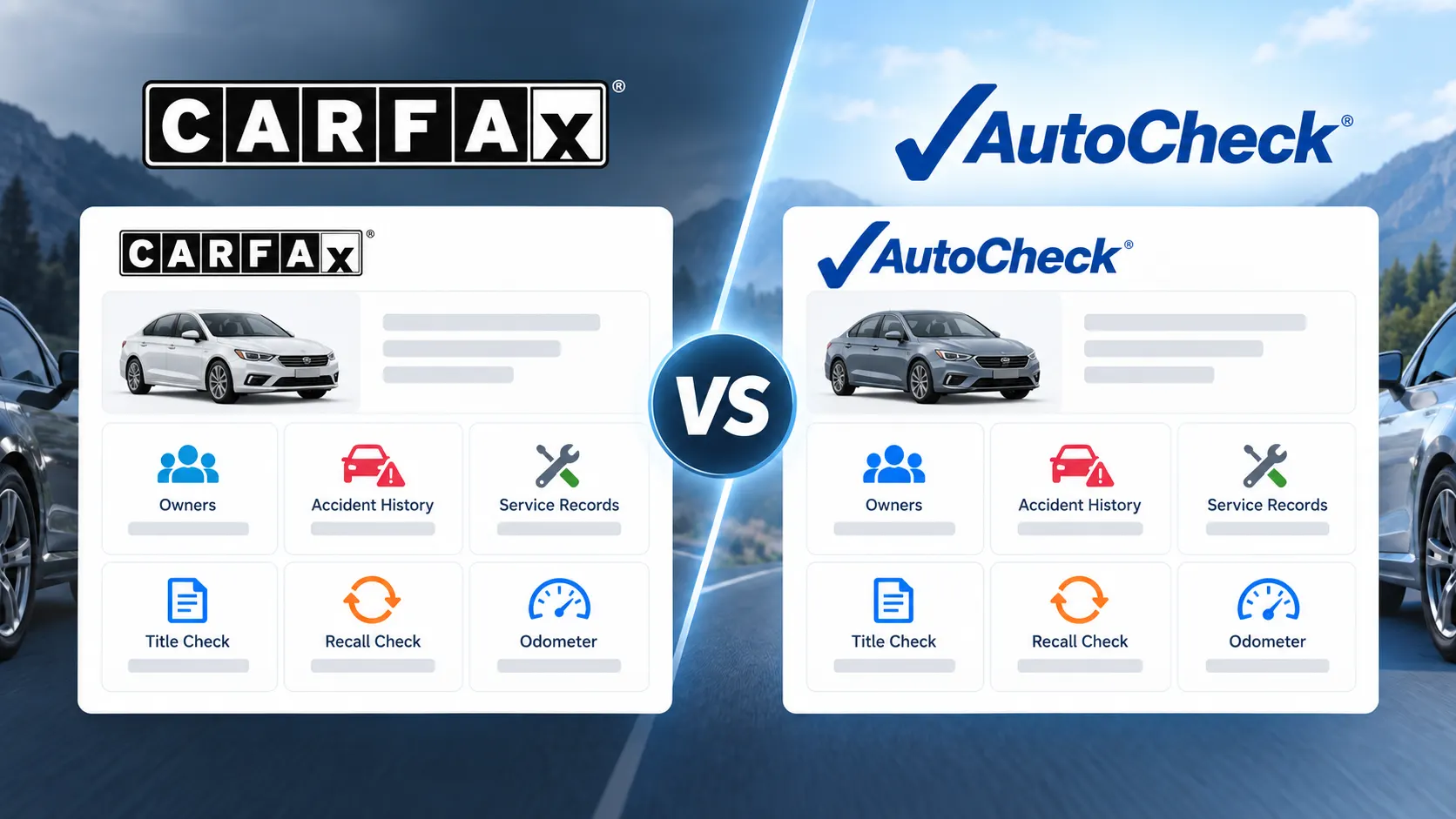
CARFAX vs AutoCheck
Wareing Motors Used Vehicles
CARFAX and AutoCheck are two companies that sell vehicle history reports. Shoppers ask which one is better. The more useful question is what either report can tell you, and what it cannot. A report is a stack of records tied to a VIN. It is not a mechanical inspection, and it is not a promise that the car is a good buy.
A CARFAX report and an AutoCheck report can both list accident history, title brands, and maintenance when a shop, an insurer, or an auction sent the data. The lines will not match every time. Start with the vehicle identification number. A used car with a quiet report still needs an inspection, and a blank repair section does not prove the car skipped routine maintenance.
The big “vehicle history report” results online are the report companies themselves, plus government pages. This guide is the shopper version: how to read the sections, how the two brands differ in plain terms, and what to do after you close the tab. When a Wareing Motors listing includes a report link, use it. Then keep going. Start with used vehicles at Wareing Motors if you want to see current stock across the group.
Start here
The short version
Two reports
CARFAX and AutoCheck do not share one database. The same VIN can differ.
What to read
VIN, title brand, odometer, reported accidents, owners, and service lines.
What it misses
Unreported damage, wear, and a noisy transmission never have to appear.
Then inspect
A quiet report is not proof. Look at the vehicle or have a shop do it.
What you are actually reading
Open the report and find the VIN first. It should match the VIN on the dashboard and the door jamb. If it does not, you are reading the wrong vehicle.
Then work down the sections most reports share:
- Title. Look for brands such as salvage, rebuilt, or flood if the report lists them. A clean title is not the same thing as a clean car.
- Odometer. Look for readings that jump backward or a note that the mileage may be wrong.
- Accidents and damage. These are events a source reported. A missing accident line does not prove the vehicle was never hit.
- Owners. The count is a clue about how the vehicle was used. It is not a quality score.
- Service records. Helpful when they are there. Many shops never send records to either company, so a blank service section is common.
Read the dates. A report printed last year is not today’s report. Run a fresh one, or open the link on the current listing, before you decide.
What the vehicle’s history can and cannot prove
Read the vehicle’s history as a stack of data, not as a grade. A CARFAX report and an AutoCheck report pull from different data sources. Accidents show up when somebody reported them. A missing line in the vehicle’s history is not proof of a clean life.
AutoCheck may show an AutoCheck score. Treat that score as a summary of the data AutoCheck has, not as a mechanical inspection. A dealer handing you a CARFAX report does not make it the better report. Ask the dealerships involved whether the other report exists for this VIN.
Title history, odometer readings, and repair records are the useful parts of the vehicle’s history. Routine maintenance is a bonus when a shop sent it in. Many shops never do. A pre purchase inspection is still the step that finds the worn brakes and the rusty frame the vehicle’s history never mentioned.
Wareing Motors dealerships can show the report link on a listing when that listing has one. The report services are CARFAX and AutoCheck. Neither service replaces a walk around the used car, and a free VIN check from NICB is a narrower tool than either report.
CARFAX vs AutoCheck
Both products try to assemble title, registration, and reported damage information for a VIN. They do not share one database, so the same car can show an event on one report and not on the other. That is the practical difference. One brand is not a magic filter.
AutoCheck publishes its own comparison page, and CARFAX sells its own reports. Read those if you want each company’s pitch. For a purchase, pull the report you can actually get on that vehicle, then assume it is incomplete. Dealers and private sellers sometimes provide one brand and not the other. Ask if the other report is available. If it is not, do not invent a problem. Just leave more weight on the inspection.
Free tools cover a narrower slice. NICB VINCheck looks up theft and salvage records tied to insurance data. It is not a full history report. The NHTSA recall lookup tells you whether a VIN has an open recall. Use both. Neither one replaces CARFAX or AutoCheck, and none of the three replaces a person looking at the vehicle.
What a report will not catch
A history report can miss damage that was never filed with an insurer, mechanical wear, a noisy transmission, and rust. The Federal Trade Commission’s used-car guidance is the right frame: the report does not stand in for an inspection. That is the same point in our used car vs SUV guide.
If you are shopping a truck, take the used truck inspection checklist with you. For cars and SUVs, the same idea holds. Look at the vehicle, drive it, and have a shop inspect it if you are serious.
How to use the report at Wareing Motors
On a Wareing listing, open the history link when it is there and compare it with the photos and the odometer on the page. Each listing shows the store location tied to that vehicle. You can narrow trucks on the used trucks hub, then confirm the details before you drive across western South Dakota or up to Sheridan.
Bring the questions the report raised. A branded title, an airbag deployment, or an odometer flag should be a conversation, not a surprise in the finance office. If the report is quiet, the inspection still happens. Quiet is not the same as proven.
Once the vehicle checks out, the next stops are the Finance Center and Wareing Motors locations. Approval and terms are separate from the history report.
Use the report, then verify the car
Compare the CARFAX report with the AutoCheck report when you can get both. The differences are usually in which accidents, which auctions, and which insurance records made it into the file. Mileage notes and the accident history deserve a second look. An odometer rollback flag is a stop sign.
A clean report is a start. It is not trust. Reliability of the car is what the inspection finds. A trusted mechanic, or our shop, should see the car before you buy. Class of title, salvage or clean, belongs in that conversation.
AutoCheck score is a numerical rating of the data AutoCheck has. It is not a promise. Buying from one of the Wareing dealerships still means you read the report, compare it with the car, and ask about anything that does not match.
Come see the vehicle
Browse the used inventory, then walk the inspection checklist on the exact car. Store details are on the locations page.
Frequently asked questions
Is CARFAX better than AutoCheck?
They are different commercial reports. The same VIN can show an event on one and not the other. Use the report you have, ask whether the other is available, and still inspect the vehicle.
What should I look for on a vehicle history report?
Match the VIN. Then read the title brands, odometer notes, reported accidents, owner count, and any service records. A missing accident line does not prove there was no damage.
Does a vehicle history report replace an inspection?
No. A report can miss unreported damage and mechanical wear. Inspect the vehicle or have a shop do it, even when the report looks clean.
Is NICB VINCheck the same as CARFAX?
No. NICB VINCheck is a free lookup aimed at theft and salvage records. It is not a full CARFAX or AutoCheck report. The NHTSA site is where you check open recalls by VIN.
Do Wareing Motors listings include a history report?
Open the listing and use the report link when it is provided. Confirm the VIN, the odometer, and the store location on that vehicle before you travel.


0 comment(s) so far on CARFAX vs AutoCheck